Project Description
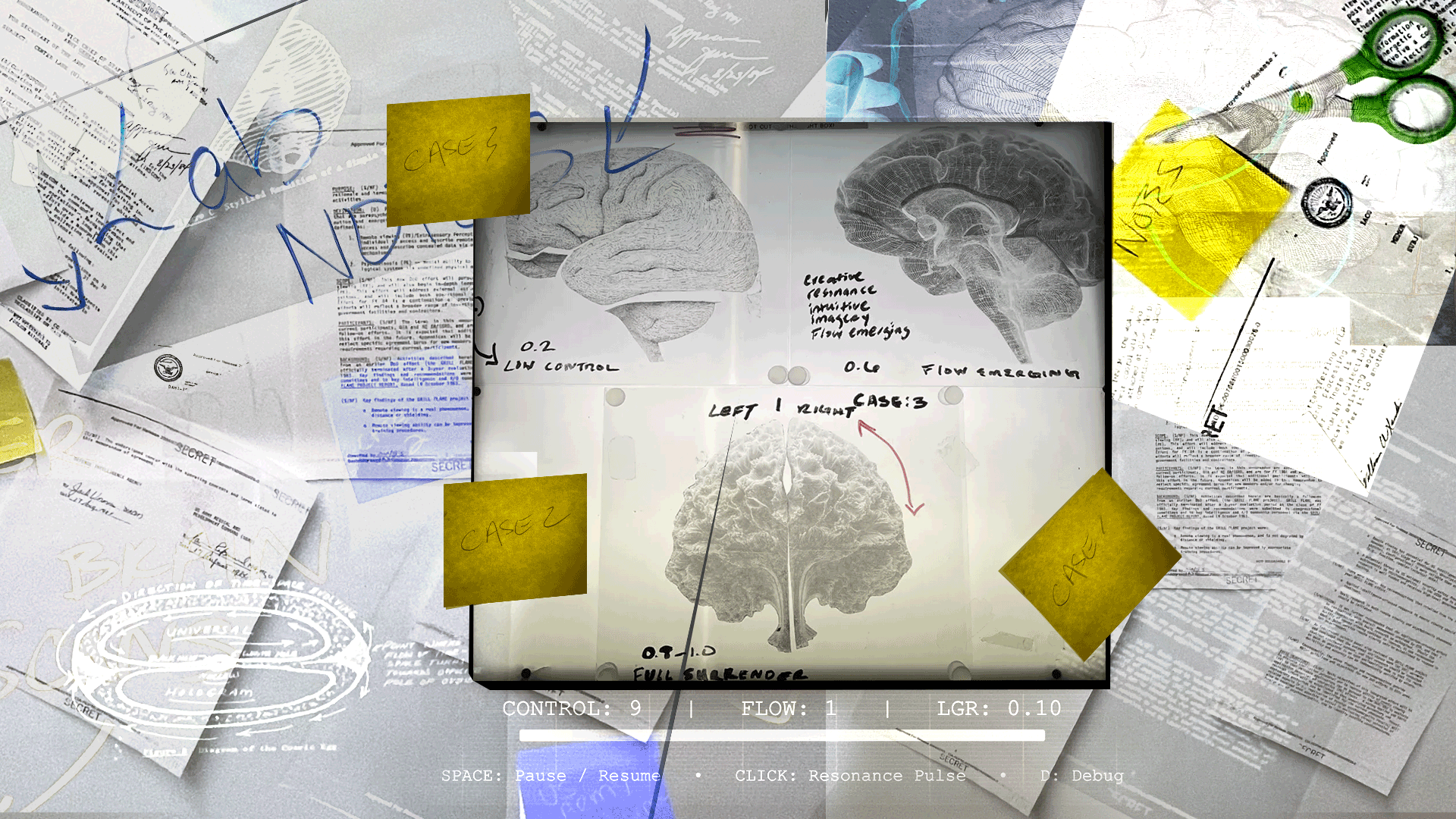
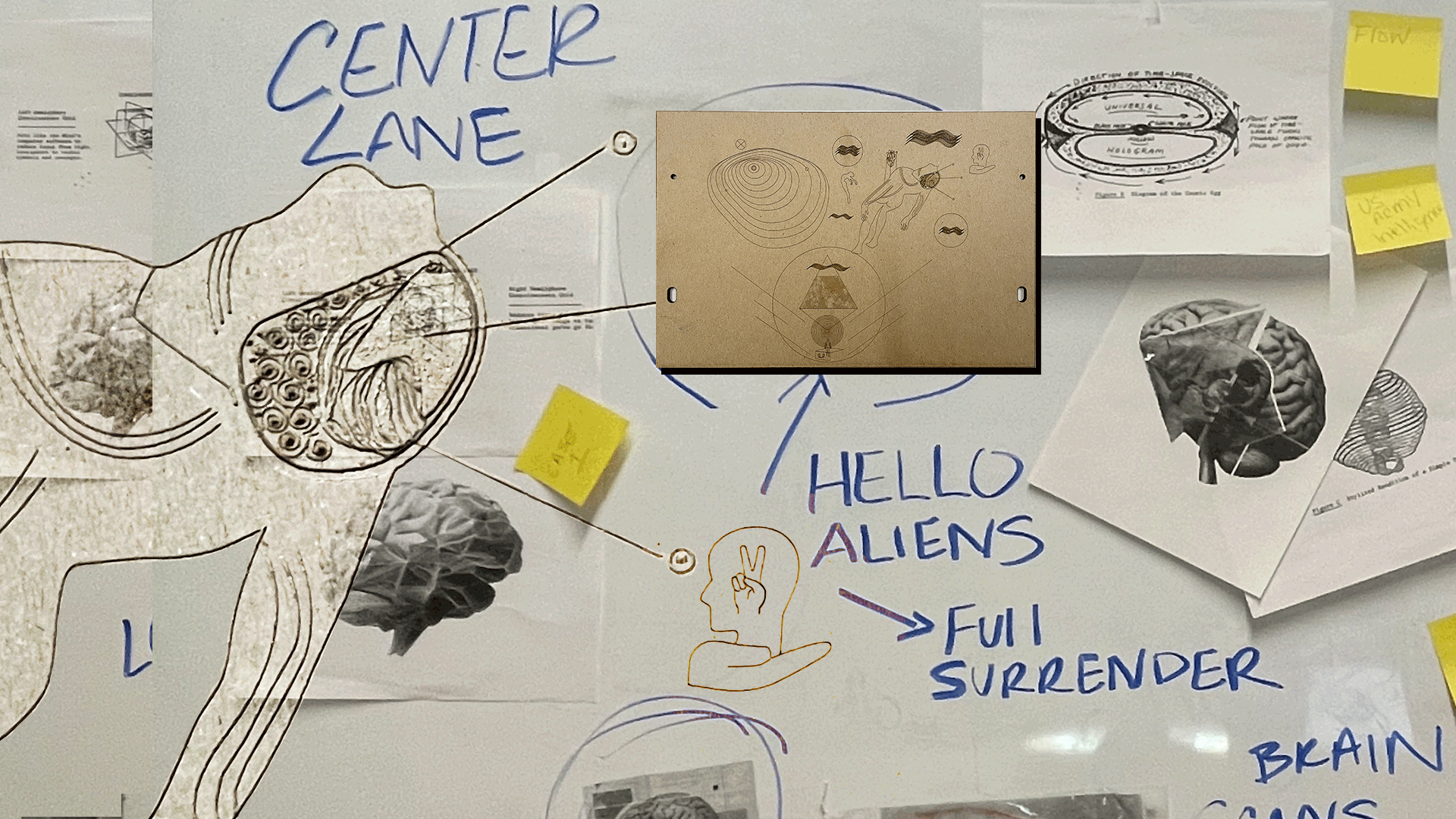
The CIA laboratory installation grounds Surrender by translating research, speculation, and lived experience into a physical system of documentation. Referencing the CIA Gateway Project—conducted between the 1970s and 1990s and classified for decades—the installation adopts the visual language of a research environment to explore surrender as a studied but unresolved state of being. The space is constructed using light boxes, post-it notes, diagrams, numerical charts, and speculative brain scans. The fragmented, observational tone reflects declassified materials from the era and acknowledges that the experiences being studied resisted clear explanation. The laboratory does not offer conclusions; it presents attempts to understand how effort, attention, and perception shift when resistance is reduced. The numerical values used throughout the installation represent relative states rather than scientific measurements. They were developed by analyzing recurring conditions described in the Gateway research, including effort, breath regulation, sensory reduction, stillness, hemispheric balance, and cognitive interference. These variables were translated into a comparative framework of three states: control, neutral, and full surrender. The numbers indicate relationship and progression, not proof. Alongside the laboratory, a “fully surrendered pioneer” plaque offers a separate interpretation of the same idea. Inspired by speculative communication artifacts, the plaque explores how the phrase “If you surrender to the air, you could ride it” might be explained to a non-human intelligence. It treats surrender as a universal condition and uses visual language to translate the concept beyond words. Together, these components frame ride as an outcome rather than an action—a state that emerges when interference drops—allowing surrender to be understood across science, speculation, and embodied experience.